Wedding Photo Usage Rights: Prints, Social Sharing and Vendor Requests
· FlashFilm Academy
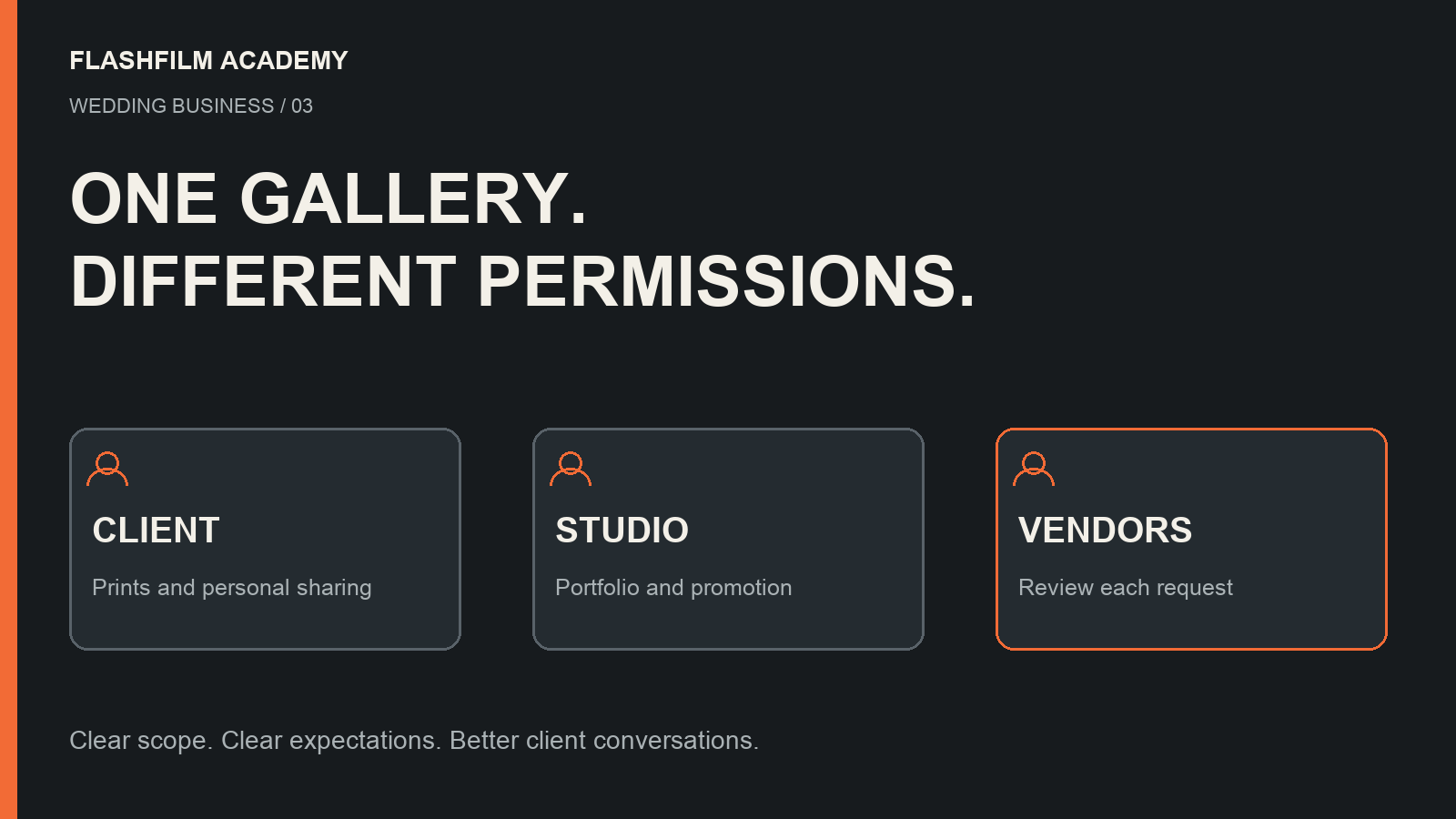
A wedding photography agreement should distinguish the files the couple receives, the permission to print or share them, the photographer's own promotional use, and any permission given to wedding vendors. A print permission, a florist's advertising request and a copyright transfer are different decisions. Write them clearly instead of using “full rights” as a catch-all description.
For photographers, this is both a client-experience question and a business question. Couples want to enjoy their photographs without guessing what they can do. Vendors may want to use those same images to sell services. The agreement should help everyone identify which use has actually been authorized.
Separate file delivery from copyright ownership
In the United States, the photographer is generally the initial author and copyright owner, with exceptions such as qualifying works made for hire. The U.S. Copyright Office's guidance for photographers explains that starting point. The parties' agreements and circumstances still matter.
Delivering a high-resolution file is not, by itself, the same as transferring copyright. 17 U.S.C. §§202 and 204 distinguish ownership of copies from copyright and address written, signed transfers of copyright ownership. These are U.S. principles, not a universal rule for every country. Ask qualified local counsel to draft or review the arrangement you intend to offer.
For the sales conversation, use specific questions: May the couple order prints? Share on their own social accounts? Give a vendor permission to advertise with the pictures? Do you intend to retain copyright or negotiate a transfer? Each question deserves a clear answer.
Describe the couple's print permission
If your package includes permission to make personal prints, say which delivered images are covered and how the couple can use them. Explain the printing workflow without suggesting that purchasing a print automatically buys copyright.
Decide how you will handle albums, gifts for family and printing through outside labs. If you offer your own album or print products, describe them accurately as included items or optional purchases. Avoid making a client discover after delivery that a service they assumed was included costs extra.
Use the same description in the proposal, contract and delivery email. A carefully written permission in one document is undermined by a delivery message that casually promises “do anything you want.”
Make personal social sharing understandable
Tell the couple whether they may post delivered images on their own accounts and whether any conditions apply. If you request credit, provide a simple account name or link. If you restrict edits, explain the scope of the restriction in language a client can follow rather than relying on unexplained legal terminology.
Discuss the delivered versions as well. A print-quality download and a convenient web-sharing copy serve different purposes. Providing a clear folder or gallery structure can reduce confusion, but it does not replace the underlying permissions.
Do not imply that your preferred sharing terms are automatically the law. They are business choices to document consistently and review for the relevant jurisdiction.
Treat a vendor's marketing request as a separate use
Suppose a florist asks the couple for ten wedding photographs to use on the florist's website and in paid advertisements. The couple's permission to share photographs personally may not cover that commercial use. Review the actual license instead of assuming that the couple can authorize it.
Ask the requesting business:
- Which specific images do you want to use?
- Where will they appear: an organic post, website portfolio, brochure or paid advertisement?
- For how long, and in which markets?
- Will anyone else receive or edit the files?
- Does the proposed use require additional permission concerning identifiable people or private locations?
These questions define the request; they do not predetermine a fee or a legal outcome. A limited portfolio use and a broader advertising campaign can justify different business discussions. Our guide to commercial photography usage questions provides a fuller checklist for assessing that scope.
Decide your own portfolio use with the client
Your ability to make and own photographs should not be treated as an answer to every privacy, publicity or advertising-permission question. Discuss whether you intend to display the wedding publicly, submit it to a publication or use selected pictures in paid promotion. Have counsel identify the permissions required in the relevant location and circumstances.
Give the couple a clear opportunity to communicate privacy concerns before the shoot. They may be comfortable with a few detail photographs but not identifiable portraits, or they may need an agreed publication delay. Record the arrangement and make it visible to anyone selecting images for your marketing.
A second photographer or editor should receive the relevant usage instructions as part of the project handoff. Do not assume a client's agreement with your studio automatically resolves every collaborator's rights or obligations.
Use a permissions sheet for each booking
Create a short working summary alongside the reviewed agreement. Label it as a summary and make sure it matches the signed terms:
- Client use: the agreed personal printing and sharing permissions.
- Studio use: the agreed portfolio or promotional permissions and any restrictions.
- Vendor use: requests that require a separate discussion or authorization.
- File delivery: which images and formats the client receives.
- Questions: the contact for a new use that is not covered.
Consider a hypothetical couple who wants family prints and personal social posts but does not want portraits used in advertisements. The summary should reflect that decision. If the venue later requests an advertising image, the team can consult the documented arrangement before responding.
The value of this sheet is operational clarity. It is not a substitute for legal drafting, and it should never silently override a different agreement.
Keep this permissions summary beside the coverage plan. Our guide to wedding photography coverage hours and overtime covers the separate decisions about when the team works and how an extension is approved.
Respond to a vendor without guessing the rights
Here is an original response you can adapt after checking the booking: “Thanks for asking. Please send the image numbers, intended placements, whether the use includes paid advertising, and the requested dates. I will review those details against the client agreement and any privacy restrictions, then confirm the permissions, file delivery and any fee before you use the images.”
This message collects facts without promising an automatic approval or charge. If the signed agreement already permits the requested use, honor that permission. If the request exceeds it, explain the proposed next step and record any agreed changes before delivering files for that use.
Review the template before sending it
The FlashFilm Academy wedding photography agreement reviewed for this article has sections concerning copyright, sharing, model release, capture and delivery, and archiving. Customize those sections together so the promised files, permissions and promotional use agree with one another.
The supplied version uses an older Image DVD reference and includes conditional permission for sharing on vendor websites. Do not describe that version as prohibiting every vendor use. Read its conditions, distinguish a vendor website from the actual advertising request, and have counsel clarify the intended license and ownership wording before using it with a client.
Pay particular attention to older delivery references or ownership terminology in any template you use. If you deliver through an online gallery, your agreement should accurately describe that workflow. Ask counsel to distinguish a license from a transfer and to resolve any ambiguous language before you send the document to a client.
Buy the agreement and document the permissions
Buy the Wedding Photography Agreement for $39.99. The one-time purchase provides editable Word, PDF and fillable PDF formats that you can adapt and have reviewed for your business.
If you also need agreements for other creative work, buy the $99 Ultimate Contract Pack and review its current library and sales-template bonuses. A template helps organize the decisions; it does not guarantee legal protection or replace independent advice.
For a free way to uncover work that may be missing from your quote, get the Free Prompt Kits and open Hidden Work Tracker. Create or sign in to your Academy account first. New free-resource access requires Academy marketing email opt-in and subscription confirmation when prompted; no paid membership is required, and you can unsubscribe anytime. Hidden Work Tracker helps review time spent on planning, client communication and delivery. Use it for business planning, not for deciding legal rights. Explore paid Academy membership for continued training and community discussion around client work. Membership and contract purchases are separate.
Common questions
Does a print release give the couple copyright?
Do not treat the terms as interchangeable. Read the actual document to see what permissions or rights it grants; get legal advice if it is ambiguous.
Can a venue use wedding pictures because the couple sent them?
Sending a file does not settle whether the intended use is authorized. Check the applicable permissions and handle the venue's request explicitly.
Should a photographer promise every client the same rights?
A consistent default can simplify communication, but the final agreement must reflect the actual booking, any negotiated changes and applicable law. Record exceptions so your delivery and marketing teams can follow them.
YOUR NEXT STEP · START FREE
Take one useful step toward a stronger creative business.
Get ten free prompt kits for photographers and videographers. Research buyers, clarify your offer, track hidden work or prepare for shoot day—then check the results against real evidence.
Get the free prompt kitsEnter your email for a free community access invitation and Academy emails. Unsubscribe anytime. Already a member? Open this resource with your existing account.
Build on your first step with structured training and community. Explore Academy membership.
Join the conversation.
Read along, ask a question, or share your experience. Comments are open to active FlashFilm Academy members.
Loading comments…