Real Estate Photography Checklist: Before You Arrive
· FlashFilm Academy
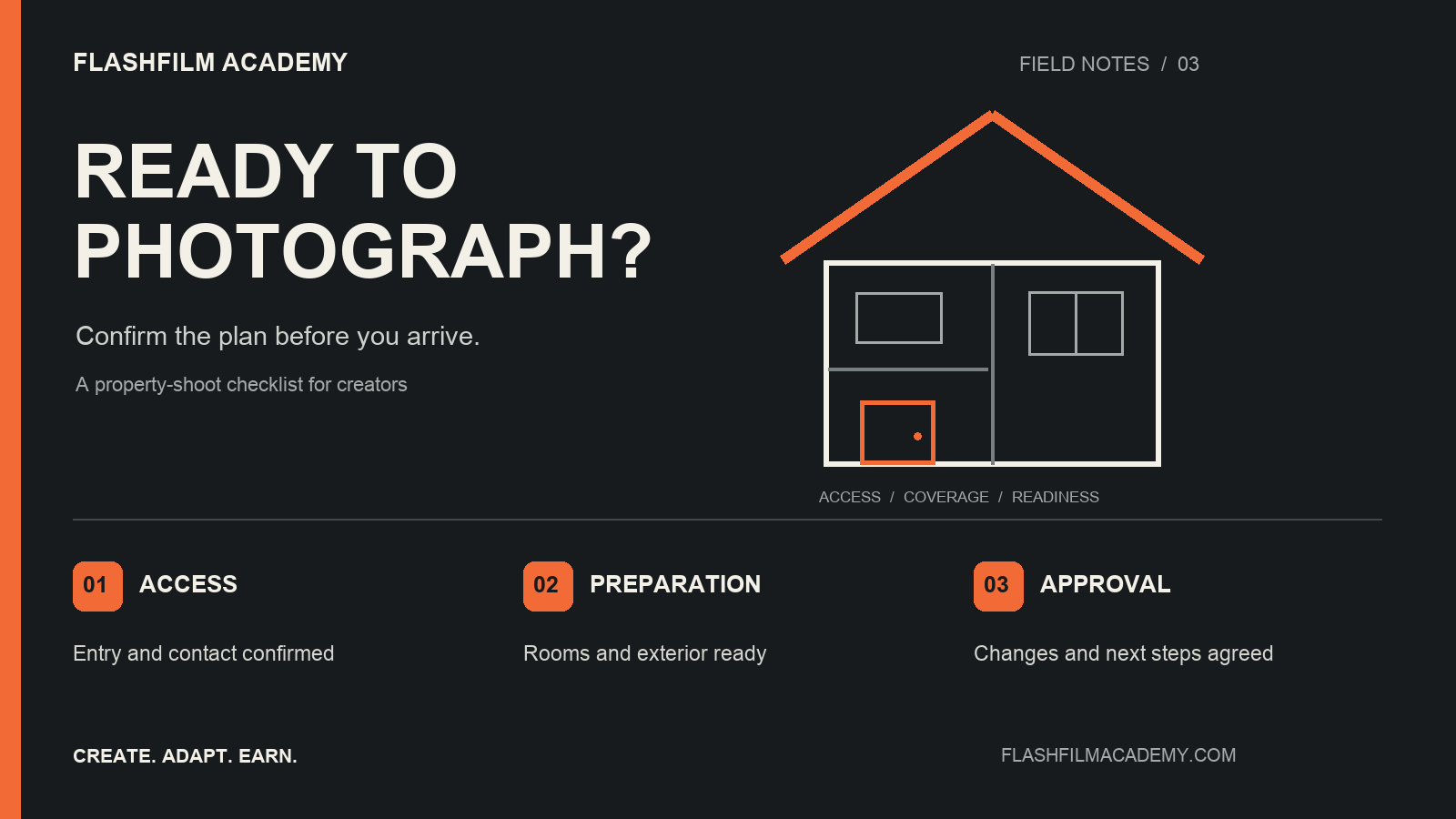
Before a real estate photography shoot, confirm that you can enter the property, the agreed rooms and exterior areas are ready, one person can approve changes, and everyone understands the plan if the property or weather prevents the work. Send a preparation checklist when the appointment is booked, ask for a readiness confirmation before you travel, and do a short walkthrough before setting up.
For photographers and videographers building a repeatable property-media business, this is a client-service skill. A good camera cannot solve an inaccessible building, an unfinished kitchen or a disagreement about whether a return visit is included. The checklist below helps turn those unknowns into decisions.
Define what “ready to photograph” means
Write a simple standard for the appointment: the areas in the agreed shot list should be accessible, cleaning and staging should be finished, and the person responsible for the property should have handled personal belongings and pets. Adapt that standard to the service you actually sell. If you offer styling or preparation as an additional service, describe its scope and time separately.
Send the standard to the agent or person booking you, and ask who will pass it to the occupants. A checklist sitting in an agent's inbox does not tell you whether the homeowner has seen it. Give each open item an owner and a confirmation time.
1. Confirm access before loading the car
Record the complete property address, unit number, parking instructions, appointment time and a contact who will answer during the shoot. Ask about gated entrances, building check-in, elevator reservations and any areas you cannot enter. Confirm that the client has arranged permission for the work and access to every space in the agreed coverage.
Agree how any key or temporary access details will be shared securely. Keep door codes, alarm information and occupant contact details out of public briefs and general-purpose AI prompts. If the contact will be absent, identify a backup and how long you will wait for a response before discussing the next step.
2. Give the client a practical room checklist
Keep the preparation instructions short enough to use. Realtor.com's listing-photography guide includes a seller checklist covering cleaning, clutter, personal items and outdoor preparation. Use those basics, then add the requirements of this particular assignment.
- Kitchen and living areas: clear distracting everyday items, finish cleaning visible surfaces, and place furniture before the appointment. Identify an off-camera storage area that is not itself on the shot list.
- Bedrooms and bathrooms: make beds, organize visible linens and remove toiletries or personal documents the occupant does not want photographed.
- Windows and lighting: flag broken blinds or inaccessible fixtures in advance. Ask the client to complete any agreed cleaning or lamp preparation; inspect the light yourself when you arrive.
- Exterior: finish agreed yard work and move bins, equipment and vehicles out of planned compositions when practical. Preserve safe access to paths and entrances.
- People and pets: agree where occupants and pets will be during each part of the shoot. Make the plan workable for the household instead of assuming an occupied home will be empty.
Have the client handle valuables, medication, paperwork and fragile possessions. If a heavy object must move, arrange for the appropriate person to do that before the session. A photographer should not discover a furniture-moving assignment when the first appointment is already running late.
3. Separate essential coverage from optional extras
Ask which spaces and features matter most to the listing. Make a coverage list with three groups: required photographs, optional angles if time permits, and services outside this booking. Write down whether detached buildings, community amenities, twilight images, video or aerial work are included. One property address does not automatically define all of those deliverables.
For each required area, add its preparation owner and current status. For example: “Kitchen — counters cleared and appliances installed — agent to confirm Tuesday afternoon.” This makes an unfinished task visible before you promise a complete gallery.
If the booking includes video, account for movement through the property. A pile hidden behind a still camera might appear during a walkthrough. Use the same approach as our video production brief checklist: specify the finished deliverables, constraints and approval contact before building the shot list.
4. Set a readiness check and a weather decision
Choose a confirmation time that gives you a realistic opportunity to respond. For a morning session, that might be the previous afternoon. Ask the booking contact to confirm access, completion of preparation and anything that changed. A few current phone photos can help discuss an unresolved area, provided the client avoids including private information.
Separate an aesthetic weather preference from an unsafe condition. A cloudy exterior and a thunderstorm call for different decisions. The National Weather Service's lightning guidance says there is no safe outdoor location when thunderstorms are nearby; hearing thunder is a reason to move to safe shelter. Do not let a listing deadline override that decision.
Agree who contacts whom, when you will reassess and whether the booking can be split into interior and exterior sessions. Clarify the effect on delivery and any additional visit before agreeing to split the work. Avoid presenting a weather policy as a guarantee that conditions will cooperate.
5. Check the agreement before discussing cancellation fees
A preparation checklist explains the workflow. Your actual agreement needs to describe the commercial terms. Review what it says about cancellations, rescheduling, delivery and responsibilities before telling a client that a fee applies.
The supplied editable FlashFilm Academy Real Estate Photography Agreement, reviewed for this article, permits the client to cancel before the property shoot without a penalty. It also includes delivery and payment provisions with details to complete. Do not assume that this version contains a 24-hour cancellation charge, a waiting-time fee or a property-readiness surcharge.
If your intended workflow needs different terms, have qualified local counsel help align the agreement, estimate and client instructions before using them. Ask how to distinguish cancellation, a mutually agreed reschedule, inability to access the property and a requested return visit. This article is business-process education, not a statement that a particular charge is legally valid. Applicable law and the signed terms matter.
The real estate agreement is also part of the paid Ultimate Contract Pack. Both the individual template and the pack are paid products; neither is the free checklist resource linked below. A template still needs review for your service and location.
6. Use a short walkthrough to agree on the next step
On arrival, compare the property with the agreed coverage before you start the main session. If something is unresolved, describe the problem factually and offer realistic options to the authorized contact. Record the decision, any omitted coverage and any revised delivery expectation.
- Ready: proceed with the agreed plan.
- Small issue with a practical fix: ask the responsible person to resolve it, confirm the time available and reassess.
- Important area unavailable: discuss whether useful partial coverage meets the client's needs or whether the session should move.
- Unsafe conditions: stop the affected work and establish a safe next step.
Do not silently omit an important room and hope the client will accept the gallery. Equally, do not promise an extra trip or editing work before checking the agreement and obtaining approval for any change.
A practical example: the kitchen is still being installed
Consider a fictional booking for a three-bedroom listing with a Friday launch. During Thursday's readiness check, the agent reports that the kitchen installation is unfinished. The kitchen is a required feature in the coverage list, so the photographer explains that a complete gallery cannot be delivered from the property in its present state.
The photographer and agent discuss moving the session, photographing ready areas with a separately agreed return plan, or revising the coverage and launch expectations. They choose to move the appointment and confirm the new delivery date. They check the cancellation and rescheduling terms instead of inventing a charge. An unresolved production issue becomes an explicit client decision.
Copy this confirmation message
“We're booked for [date/time] at [property]. Please confirm by [time] that access is arranged, the areas in our shot list are prepared, and [contact] can approve any changes. Let me know about unfinished work, occupied rooms or other access limits now so we can agree on a plan. If conditions affect coverage, we'll discuss the next step and check our agreed terms before changing the booking.”
Adapt the message to your actual service and agreement. Save the reply with the job details so anyone helping on the assignment can see what was confirmed.
Questions photographers ask before a property shoot
Should I send the checklist to the agent or homeowner?
Start with the person booking you, then confirm who will deliver and explain it to the person preparing the property. Keep one authorized contact responsible for coverage and scheduling decisions.
Should cleaning and staging be included?
Only promise the services you intend to provide. Describe any included preparation, its limits and the time allocated. Ask clients to arrange other work before the shoot rather than assuming you will absorb it.
What if the property is not ready when I arrive?
Document the specific obstacle, contact the decision-maker and discuss workable options. Check the actual agreement before applying fees or changing the delivery promise. Confirm the chosen plan before continuing.
Prepare your next shoot with the free prompt kit
Use the free Shoot-Day Readiness Checklist in our ten Prompt Kits to organize the people, location, access, approvals and delivery details for your next assignment. Kit 10 includes a PDF worksheet and a TXT prompt. Add accurate project context, leave out access codes and private client information, then check the output against the actual booking. It is a planning aid, not a contract-writing service.
Enter and confirm your email, then follow the access invitation to create or sign in to a free Academy account. Signup includes practical Academy follow-up emails; you can unsubscribe. No paid Academy membership is required. Your chosen AI tool's access and usage costs are separate. Existing members can open the Free Prompt Kit space and choose kit 10.
For structured training and community support as you build your photography or video business, explore FlashFilm Academy's monthly and annual memberships. Use the free kit to prepare one assignment, then build a repeatable client workflow through the Academy.
Cover: original FlashFilm Academy readiness diagram. Sources, supplied agreement and linked offers reviewed October 21, 2026.
YOUR NEXT STEP · START FREE
Take one useful step toward a stronger creative business.
Get ten free prompt kits for photographers and videographers. Research buyers, clarify your offer, track hidden work or prepare for shoot day—then check the results against real evidence.
Get the free prompt kitsEnter your email for a free community access invitation and Academy emails. Unsubscribe anytime. Already a member? Open this resource with your existing account.
Build on your first step with structured training and community. Explore Academy membership.
Join the conversation.
Read along, ask a question, or share your experience. Comments are open to active FlashFilm Academy members.
Loading comments…