Price Anchoring for Content Creators: How to Handle Low Offers
· Ty Turner
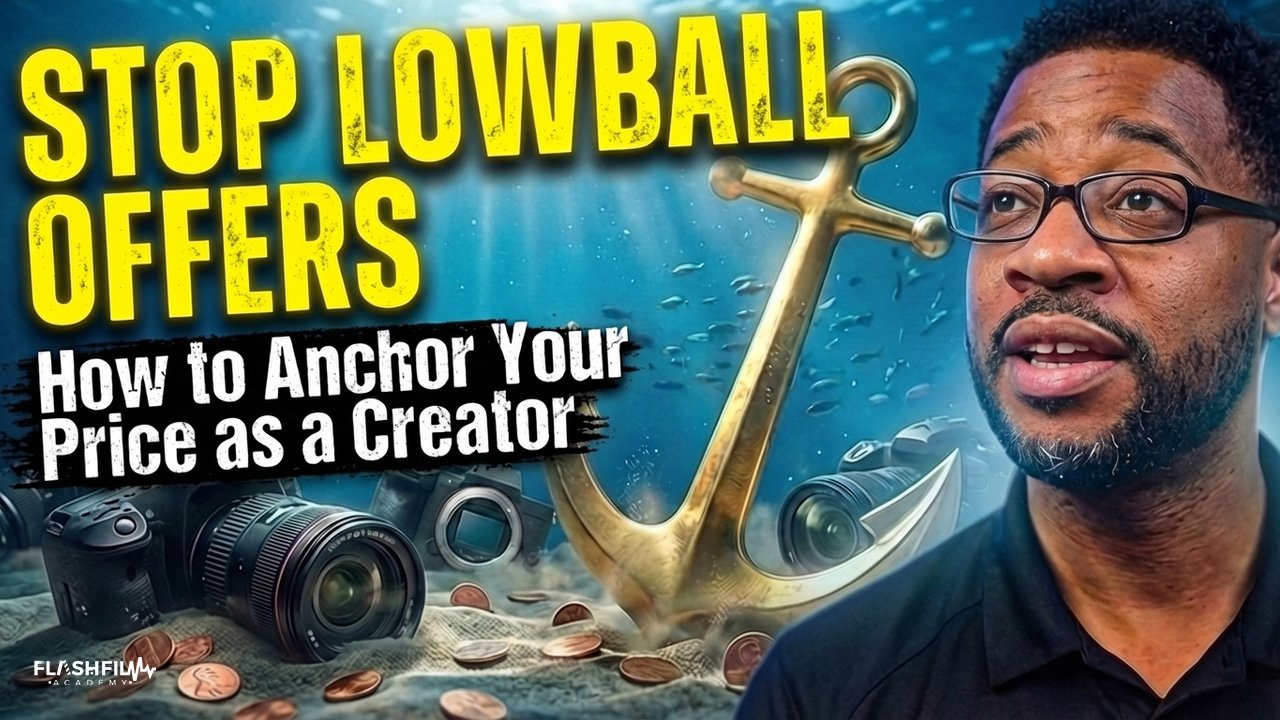
CLICK IMAGE TO WATCH THE VIDEO
You’ve been there before. You put in the work, you scope out the project, and you send over what you believe is a fair quote. Then, the silence hits. When the client finally responds, they flinch. They hit you with that dreaded phrase: "What can you do for less?" or "That’s a bit higher than we expected—can you do it for half?"
It’s a cycle that happens over and over again, and if you aren't careful, it starts to eat away at you. You begin questioning your prices, your value, and even your worth as a creator. If you’re tired of getting hit with these lowball counter-offers and feeling like you’re constantly defending your right to make a profit, it is time to change the game. This isn't just about being a better videographer or photographer; it’s about building a business, not just a portfolio.
At Flashroom Academy, we focus on what actually wins in the field, not what trends on social media. We aren't here to push the latest camera gear or show you cinematic shots of us walking into a studio. We are here to talk about the "meat and potatoes" of closing real deals with real clients. If you want to stop being a victim of the "client flinch," you have to understand that the problem usually isn't the price—it’s the frame.
The Problem Isn't Your Price
When a client asks for a discount, most creators immediately go into a defensive crouch. You start thinking about your overhead, your gear, and the hours of editing ahead of you. You try to hold your ground, but eventually, you cave just to keep the deal alive. Or, you lose the deal entirely and walk away frustrated.
The standard advice you’ll hear from "internet gurus" is usually some variation of:
"You just need more confidence."
"Quote higher and be firm."
"Find better clients; these ones are just cheap."
"The market is just too saturated."
But what if they aren’t cheap? What if the market isn't the problem? What if the issue was how you introduced the price in the first place? When you present a number without the proper context, the client assumes they are being sold to. They see your quote as a "top-tier" offer and immediately feel the need to negotiate down. If you don't control the frame of the conversation from the start, the client will control it for you.
Understanding Anchoring Control
The missing variable in most creator-client relationships is Anchoring Control. In any negotiation, the first number mentioned sets the "anchor." This anchor determines the expectations for everything that follows. If you don't set the anchor high and with intent, the client will assume they are overpaying no matter what price you give them.
Anchoring isn't about manipulation; it's about expectation design. If you don't take the time to design the client’s expectations, their own assumptions will decide your value. When you send a quote and the client flinches, it’s usually because you haven't preconditioned them to understand the scale and value of the work. You are essentially letting them walk into a dark room and guess the dimensions, rather than turning on the lights and showing them exactly what they are looking at.
Why Your Quotes Feel Like Ceilings
Most creators treat their quote as a final destination—a ceiling that the client is trying to crash through. In reality, a well-structured quote should feel like a starting point. When you understand framing, you stop presenting "a price" and start presenting a "value range."
If your quote feels like a ceiling, you have no room to move. You are backed into a corner where the only options are to "take it or leave it" or "devalue your work." By using anchoring control, you reframing the price before it ever becomes a problem. You set the stage so that when the number finally lands, it feels like a logical conclusion rather than a shocking surprise.
The Importance of a Battle-Tested System
You can’t fix a pricing problem with a one-size-fits-all answer you found in a YouTube comment section. That’s why so many creators struggle—they are looking for a quick fix to a foundational problem. To truly stop the lowball offers, you have to build a complete business system.
This system involves three critical stages:
Preconditioning: Setting budget expectations long before the formal quote is sent.
Framing: Positioning yourself as a partner in their business growth, rather than just a "vendor" with a camera.
Leverage: Building enough value and authority so that you aren't easily replaced by the next person with a cheaper kit.
When you build this system properly, these "pricing problems" start to disappear. You stop defending your rates because your rates are backed by a process that demonstrates clear ROI for the client. This is what we dive deep into within the Flashroom Academy modules. We don't just talk about money; we build the leverage you need to command the rates you deserve.
Key Takeaways for Creators
Control the Frame: If you don't set the expectations for the budget and value early on, the client will default to "cheapest is best."
Anchoring is Essential: Use anchoring to design expectations. The first numbers discussed should help the client understand the professional tier they are operating in.
Stop "Selling" and Start "Solving": If a client feels like they are being sold a product, they will negotiate. If they feel like they are buying a solution to a business problem, they will invest.
Build a System: Move away from "one-off" fixes. Success comes from a repeatable process for quoting, onboarding, and delivering value.
Focus on Profit, Not Just Portfolios: A beautiful portfolio doesn't pay the bills if you can't close a deal at a profitable rate.
Conclusion: Make This Your Profitable Year
It is time to stop being a creator who just "hopes" the client accepts the quote. It is time to become a business owner who understands the psychology of pricing and the power of framing. When you stop fearing the "flinch" and start controlling the anchor, you gain the freedom to work with clients who respect your expertise and pay what you are worth.
Remember, we aren't here to chase views or follow the latest trends. We are here to help a dedicated group of creators reach their actual business goals. Don't let another year go by where you are just "getting by" on lowball offers. Build your system, master your framing, and make this the year you finally become profitable.
If you're ready to go deeper, look into the specific strategies of Anchoring Control and how to precondition your clients for higher rates. We’ll see you in the next phase of your business growth.
Be inspired, be creative, but most importantly, be profitable.
Watch the full video: https://www.youtube.com/watch?v=pqOs-5iV0VM
Watch the full video: https://www.youtube.com/watch?v=pqOs-5iV0VM
Watch the full video: https://www.youtube.com/watch?v=pqOs-5iV0VM
Join the conversation.
Read along, ask a question, or share your experience. Comments are open to active FlashFilm Academy members.
Loading comments…